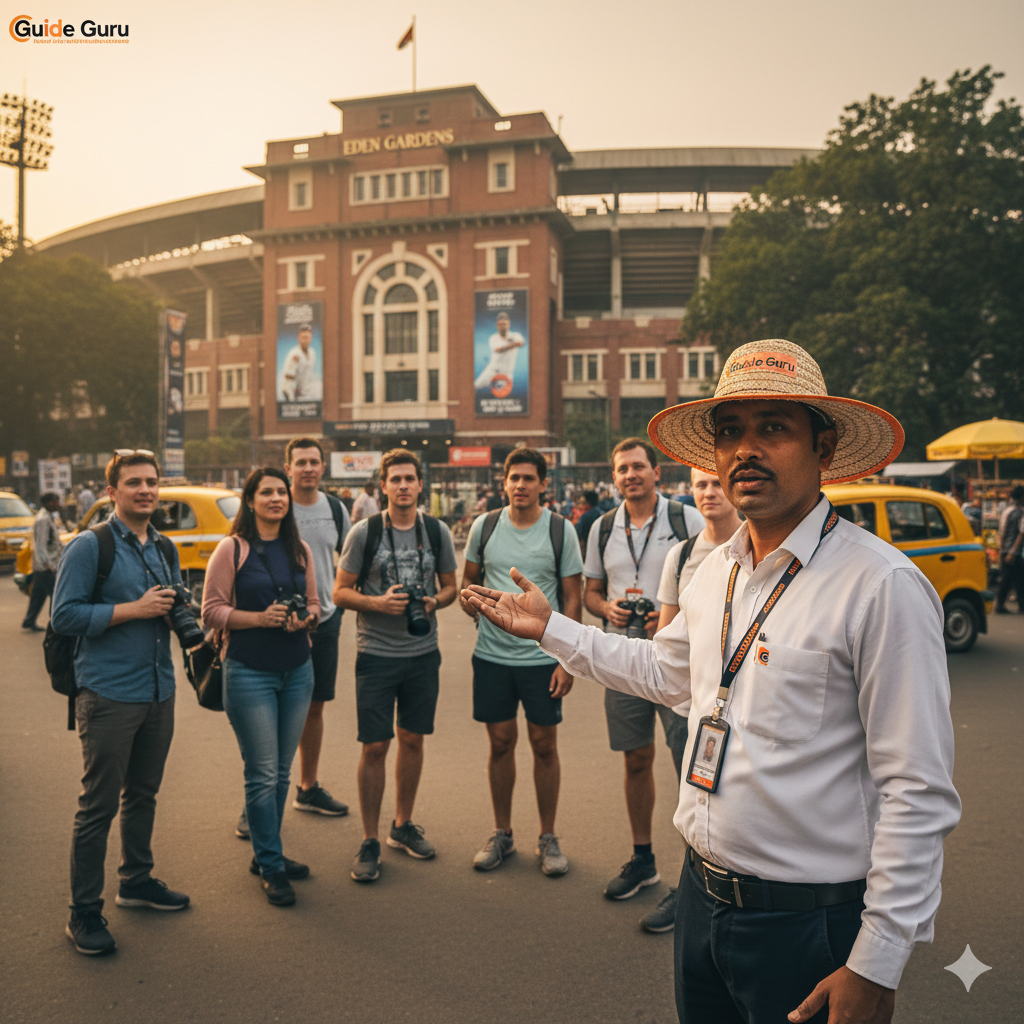
I read the new KPMG–PHDCCI report over two evenings, and I want to say at the outset that it is a serious and useful piece of work. Released around the 15th International Heritage Tourism Conclave at Hyderabad's Salar Jung Museum, it sizes the global heritage tourism market at USD 624.6 billion, headed towards USD 937 billion by 2033. It assembles India's numbers with care - 2.948 billion domestic tourist visits, 3,686 archaeological sites, 56.64 million visitors at ticketed monuments. And it lands on an idea I have spent the better part of a decade arguing for: the shift from sightseeing to story living. Travellers no longer want to look at heritage. They want to live inside it for a few hours. <br/> <br/> <br/>On the diagnosis, the report is right. Cultural encounters now rank among the leading motivations for travel. Younger travellers prefer workshops to souvenirs. Heritage walks and food trails have become core destination products rather than add-ons. It is on the question of delivery that I found myself pausing. If story living is the future, who tells the story? I read the report closely and the answer i found chapter after chapter, is a technology stack. <br/> <br/> <br/>The only subsection in fifty-nine pages with the word "guide" in its title is 3.3.2 — Multilingual AI guides. Section 3.2.3 discusses AI-powered guides and digital assistants. The futures chapter proposes generative AI agents as advanced digital concierges, evolving into intelligent travel companions. Interpretation, multilingual narration, personalised journeys, storytelling itself - the report thoughtfully assigns each of these functions to AR overlays, digital twins, gamification and conversational AI. <br/> <br/> <br/>The human guide appears twice. Both times in a list. Once among stakeholders who should benefit mentions "guides, local artisans, performers, community groups, food vendors, and cultural practitioners" and once in a key takeaway, between performers and businesses. <br/> <br/> <br/>There is nothing on India's certified guiding workforce. Nothing on the Incredible India Tourist Guides or Facilitators, on state certification regimes like West bengal, Uttar Pradesh, Rajasthan, on guide training & skilling, licensing, numbers or livelihoods. The Hyderabad spotlight, which I found the most carefully built section of the report, lists over thirty named heritage walks across the city and credits the government departments and private organisations that run them. The guides who actually walk them do not appear. <br/> <br/> <br/> <br/>I do not read this as an oversight by the research team. I read it as a reflection of how the whole sector has learned to think. <br/> <br/> <br/> <br/>Weeks before this, NITI Aayog and the Ministry of Tourism published their own tourism reform blueprint 104 pages that did not contain the phrase "tourist guide" once. That was a regulatory document, and one could argue scope. This report cannot make that argument, and that is precisely why it is worth engaging with. It is a report about experience - about storytelling, interpretation, immersion. That is not adjacent to the tourist guide's craft. That is the tourist guide's craft, practised at Indian monuments for generations. <br/> <br/> <br/> <br/>Three things seem worth putting on the table, and I offer them as additions to the report's framework rather than objections to it. <br/> <br/> <br/> <br/>One: authenticity is the variable technology cannot supply - The report builds on the 4Es of the experience economy and correctly identifies authenticity as the multiplier across all four. A multilingual AI can recite the history of the Charminar in forty languages. It cannot read a visitor's face and change the story mid-sentence. It cannot tell you what its grandmother said about the procession that once passed beneath it. It cannot walk you over to the attar-seller it has known for twenty years. The report's own research finds travellers seeking authentic local encounters and connections with local people and lived experiences and a local person is not something one can meet through an interface. I would suggest the technology the report celebrates is best understood as the guide's toolkit rather than the guide's substitute. <br/> <br/> <br/> <br/>Two: the guide is the distribution mechanism, not a beneficiary of it - The report argues, rightly, that experience layering moves destinations from volume-driven to value-driven tourism and spreads benefits across a wider network. But an AR application distributes revenue to its developer, its licensor and its cloud provider rarely anyone within a hundred kilometres of the monument. A guide is the one delivery mechanism whose earnings land, by definition, inside the destination's own economy, and who then walks the visitor to the artisan's workshop, the eatery, the homestay in the next village. If inclusive growth is the objective as the PHDCCI foreword and the Viksit Bharat 2047 framing both hold, then the guide is not an item in the stakeholder list. The guide is the distribution channel. <br/> <br/> <br/> <br/>Three: the bottleneck may be elsewhere - The report's futures chapter imagines co-creation, lifelong cultural learning, hyper-personalised discovery. Each of these already has a working prototype in this country. It is called a guide. What India lacks is not the concept but the ecosystem around it; discovery, booking, trust, certification coherence, and district-level presence for thousands of certified professionals who remain largely invisible outside ASI monument gates. Of our 800-plus districts, more than 400 have no certified guide and no ecosystem for one. A framework that reaches as far as quantum cryptography for heritage archives, but offers no mechanism for a traveller in Hyderabad to find and book a certified human guide, may be solving the second problem before the first. <br/> <br/> <br/> <br/>What I would love to see is the chapter this report did not write: the human layer as infrastructure. <br/> <br/> <br/> <br/>India's guides, community hosts, and cultural practitioners are the backbone of the experience economy. By organizing them, equipping them with digital tools, and ensuring fair incomes, we can create better visitor experiences and stronger local livelihoods. AI translation, AR, and digital twins should support guides in bringing destinations to life, not replace them. With 2.9 billion domestic tourist visits annually, India's tourism future will be shaped by authentic, guided experiences rather than passive sightseeing. <br/> <br/> <br/>The report closes by saying the next era of heritage tourism will be defined by its ability to create deeper connections between people, places, culture and history. I agree entirely. I would only add that connections between people require people at both ends. <br/> <br/> <br/> <br/>My sincere thanks to the KPMG in India research team and to the PHDCCI Tourism and Hospitality Committee for putting this out; it is the kind of document that makes a real conversation possible, which is exactly what I have tried to have here. I would genuinely welcome seeing this such excellent work extended with a chapter on the human layer in Indian tourism ecosystem. <br/> <br/> <br/> <br/>India's heritage does not need reimagining nearly as urgently as India's heritage professionals need remembering. <br/> <br/> <br/> <br/>(The writer is a former journalist and development practitioner & currently building Guide Guru Global, an ecosystem and framework to institutionalise tourist guides at the district and destination level across India.